
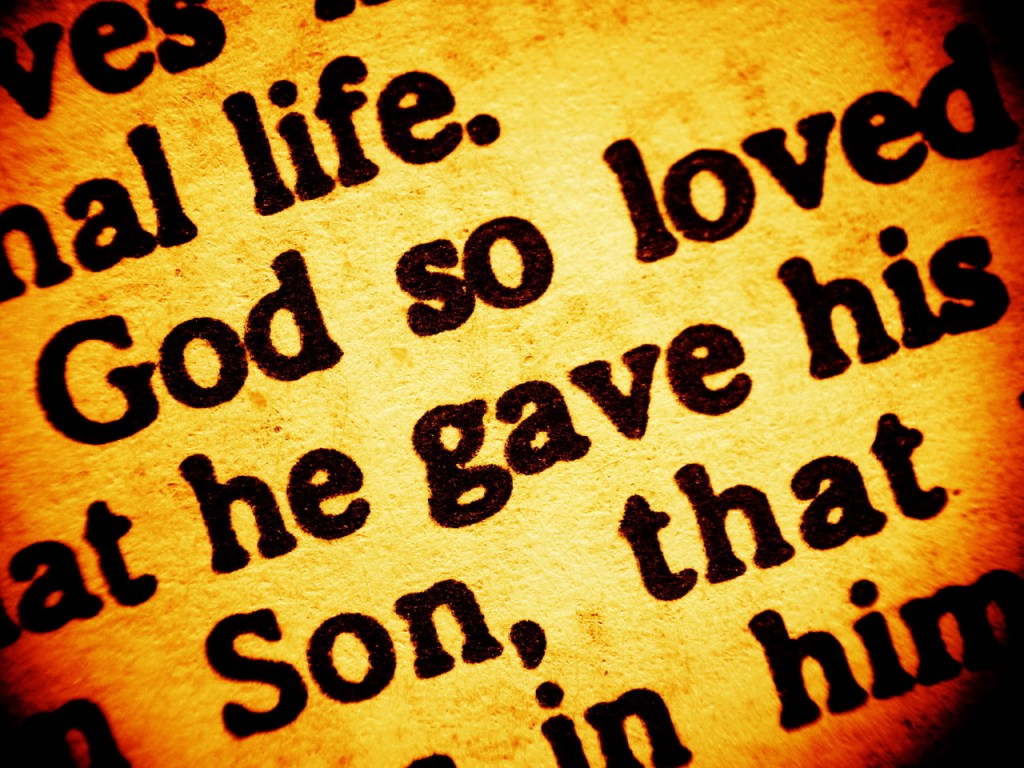
It used to be the most memorized verse in the Bible. Quoted by three-year-olds taught at their mother’s knee. “For God so loved the world, that he gave his only Son, that whoever believes in him should not perish but have eternal life.” When Tim Tebow wore “John 3:16” in eye black during the January 2009 BCS championship game, it was widely reported that the verse was searched tens of millions of times online within a day, reportedly more than ninety million searches. This verse is perhaps the most recognizable in the Bible, yet the reference can be so familiar that many people never ask what it says or what it means. They should.
It’s the Gospel in one verse. It could be explained in two ways, and I think you could make a case for both. It speaks first of the intensity of God’s love: God SO loved the world. Your child asks how much you love her and you stretch out your arms as wide as you can and say, “Soooo much!” God so loves the world that we cannot imagine His arms’ reach and His heart’s embrace. We say, “I love you, God,” and He says, “I love you more.” The second way to think about this verse is the demonstration of God’s love: God so loved the world that He gave us His Son. When we have family dinners at the Foxes to celebrate birthdays, we go around the table and share what we love and appreciate about the birthday person. And many times, we hear a child say about his mom or dad, “I love you because you play ball with me in the yard…I love you because you cook meals for us…I love you because you take us to get ice cream.” What are they saying? “Hey Dad. Hey Mom. You show me that you love me.” God so loved us that He just had to show us. He gave us His Son. And we know Jesus came willingly to give His life for us. He did not come for the good people; there are none. He came for the rebels, the enemies of God. He came for you and me. Paul wrote, “but God shows his love for us in that while we were still sinners, Christ died for us.” I would encourage you to personalize that verse. Say it like this: “For God so loved (your name), that he gave his only Son, that if (your name) believes in Him (your name) will not perish but have eternal life.”
Jesus continues in the next verse that He was sent by God to save. Not to condemn. And then He said, “whoever believes in Him is not condemned.” We are all guilty of sin, but in Christ none of us is condemned. Because Jesus took our guilt and our shame and our penalty and died to remove it. So that we could be free from it. If God has declared us forgiven, who in this world or the next can declare us condemned? No one. “Who shall bring any charge against God’s elect? It is God who justifies. Who is to condemn? Christ Jesus is the one who died.” The blood of Jesus Himself testifies that we are not condemned. And that word, “condemned,” is in the present tense, which means our guilty stains are already removed. So, when that thought comes to your mind even this afternoon, “How could God love somebody like me?” send that thought back where it belongs. The doctor tells you to take a medicine daily until it is all gone. We should also take this liberating truth daily. Learn to quote this verse to your own conscience every day: “There is therefore now no condemnation for those who are in Christ Jesus.”
What about those in the world, outside of the arms of Christ? The world has been condemned since the first sinful bite in the garden. We were all born already bitten by the serpent, dead in our sins, even from conception, and headed to death. “From that point forward,” Matt Carter wrote, “human history is a series of funerals.” Michael Wittmer wrote in his book The Last Enemy, “You are going to die…One morning the sun will rise and you won’t see it. Birds will greet the dawn and you won’t hear them. Friends and family will gather to celebrate your life and after you’re buried, they will return to the church for ham and scalloped potatoes.” It’s true, we will all die if Jesus tarries. But those who believe in Christ will never perish. That word in Greek means “lost, ruined, separated from God.” It is used in contrast to eternal life, which is given to all who believe. Those who have eternal life will never perish. Those outside of Christ will eternally perish. John wrote in his first epistle, “I write these things to you who believe in the name of the Son of God, that you may know that you have eternal life.” That you may KNOW this.
There’s so much that I don’t know. Remember Sam Cooke’s song? “Don’t know much about history. Don’t know much biology. Don’t know much about a science book. Don’t know much about the French I took.” And just to riff on the song with my own words, “But I do know that He loves you, and I know that Jesus loves me, too.”
What a wonderful world for those who believe. What a wonderful world for those who see and have hope in Jesus.


